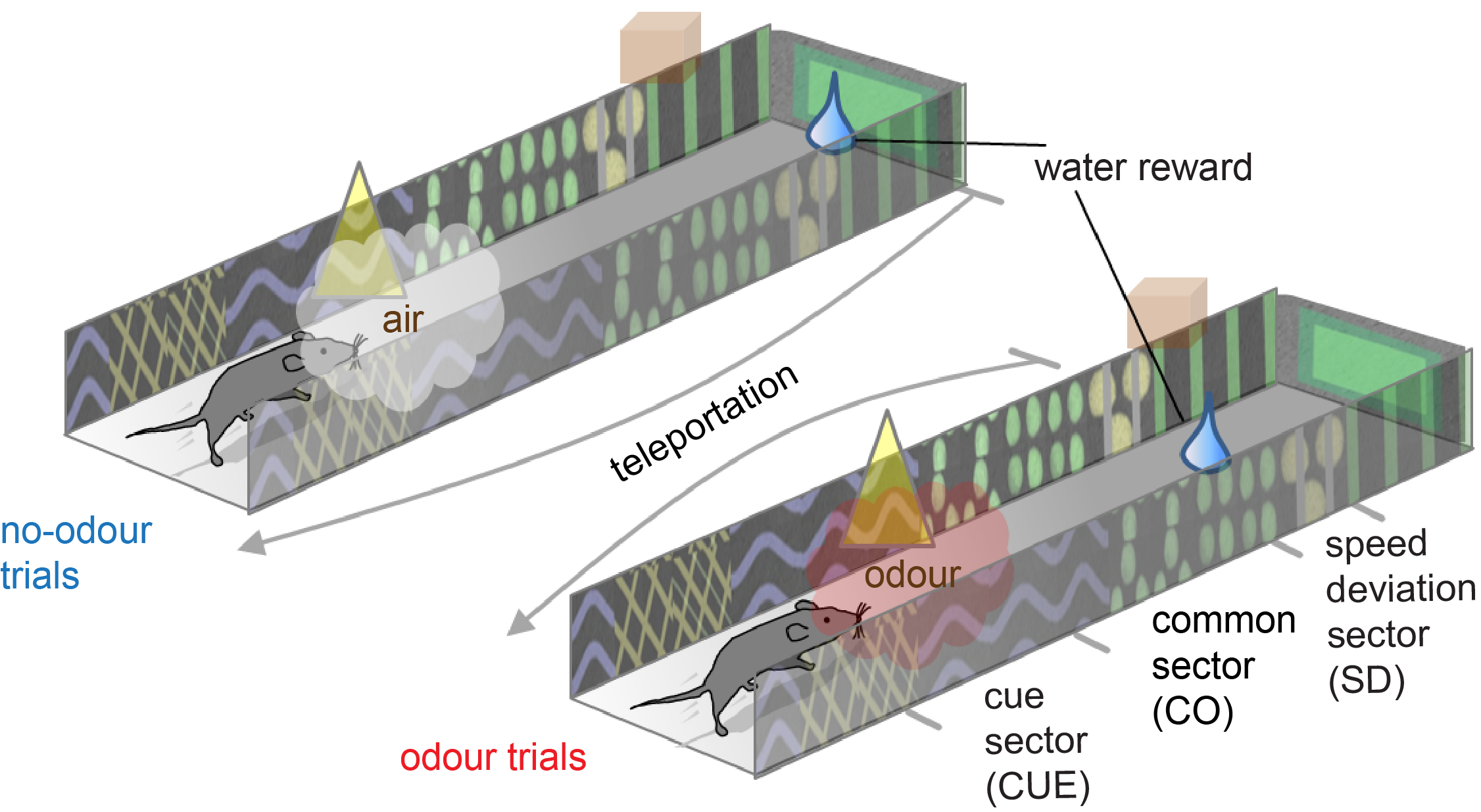
We use behavioural tasks for rodents to actively engage them in different learning paradigms, memory encoding and retrieval, decision making, cognitive flexibility, value-based decision making, and metacognition. Computational analysis and modeling of behavior identifies specific time points during task performance that are accompanied by cognitive or behavioural actions.
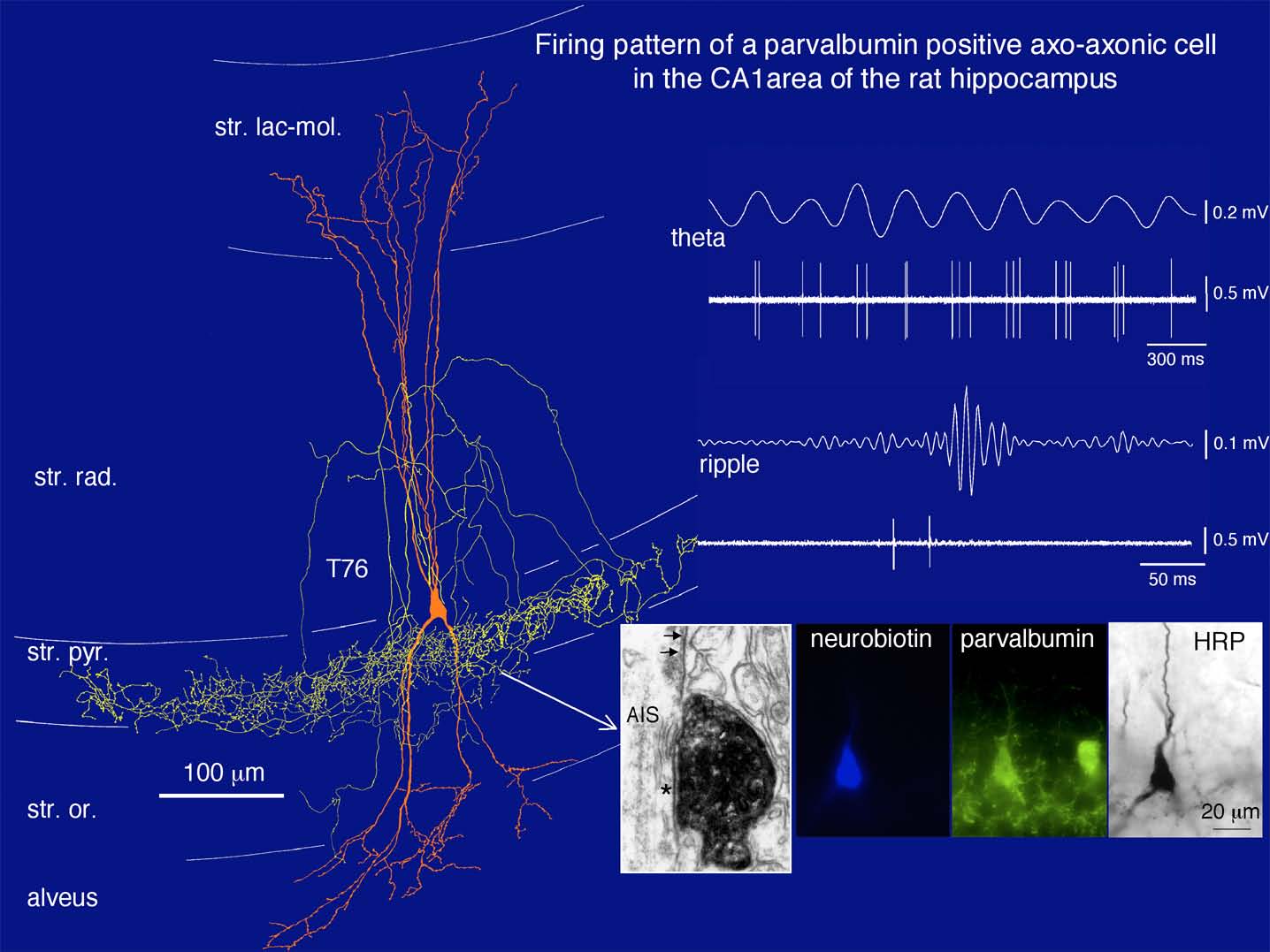
We use glass electrodes to record the action potentials of individual neurons extracellulary during behavioural task performance. Subsequently we use juxtacellular labelling of the recorded neurons to reveal its cell body, dendrites, axons, axonal projections,synaptic connectivity, as well as its molecular expression profile.
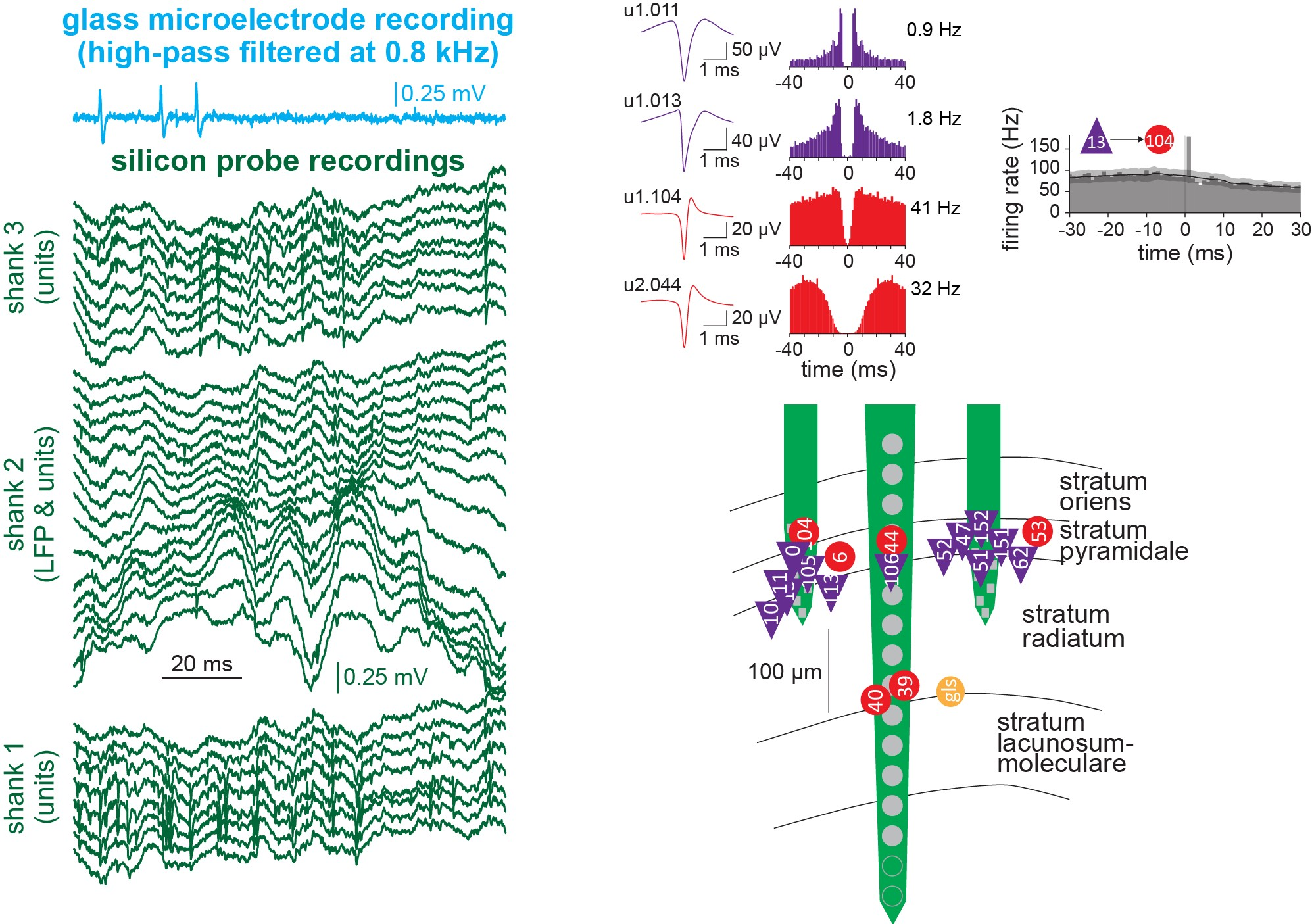
We use silicon probes and Neuropixels electrodes to record the action potentials of hundreds of individual neurons simultaneously during task performance. In addition, we record the local field potential across different layers to perform current-source-density analysis for investigating network oscillations during cognitive behaviour. These recordings are analysed by sophisticated computational examinations.
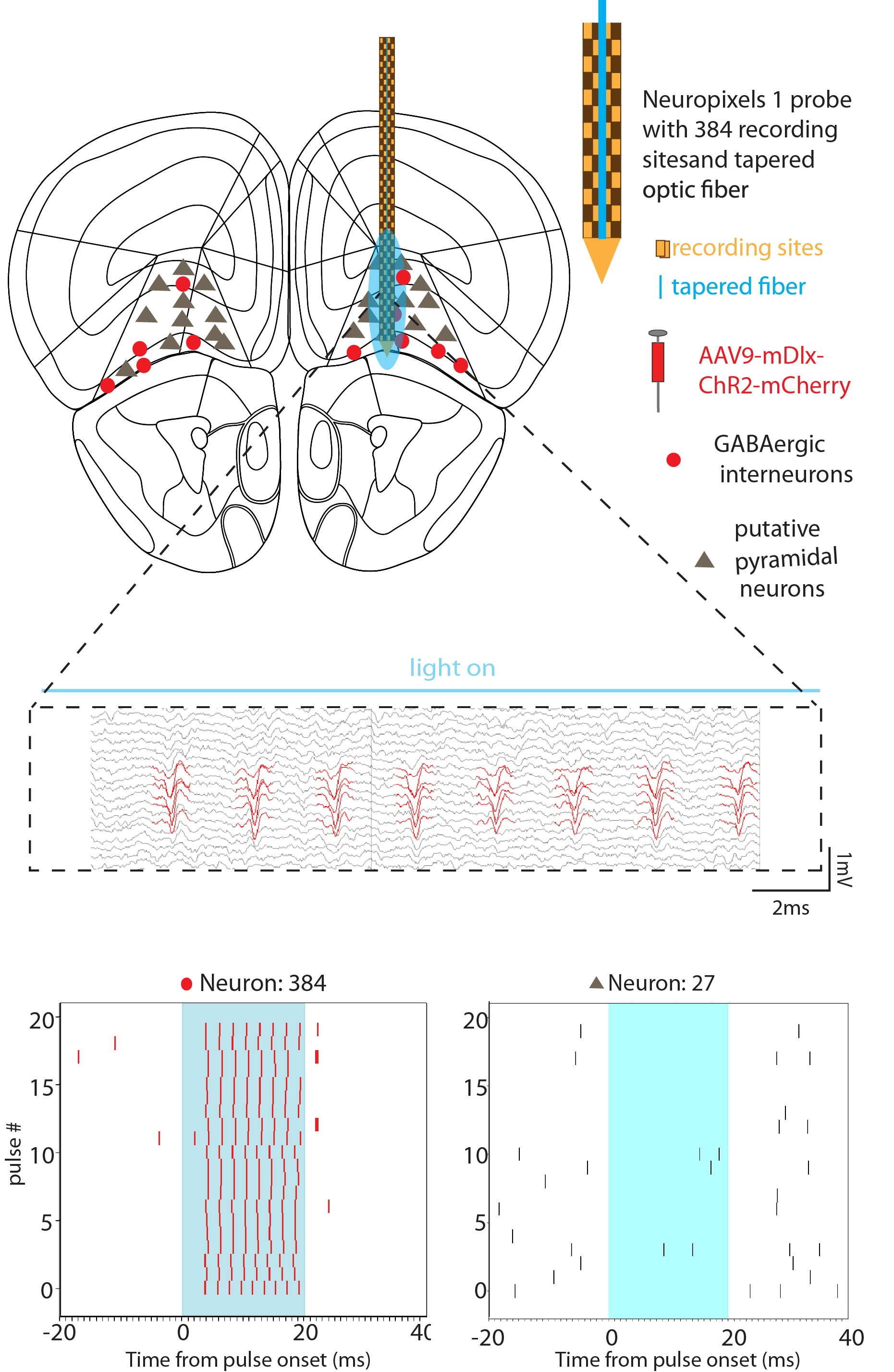
We use optogenetic manipulations to test the identity of recorded neurons via optotagging as well as to manipulate the activity of distinct groups of neurons at specific time points during behavioural task performance.
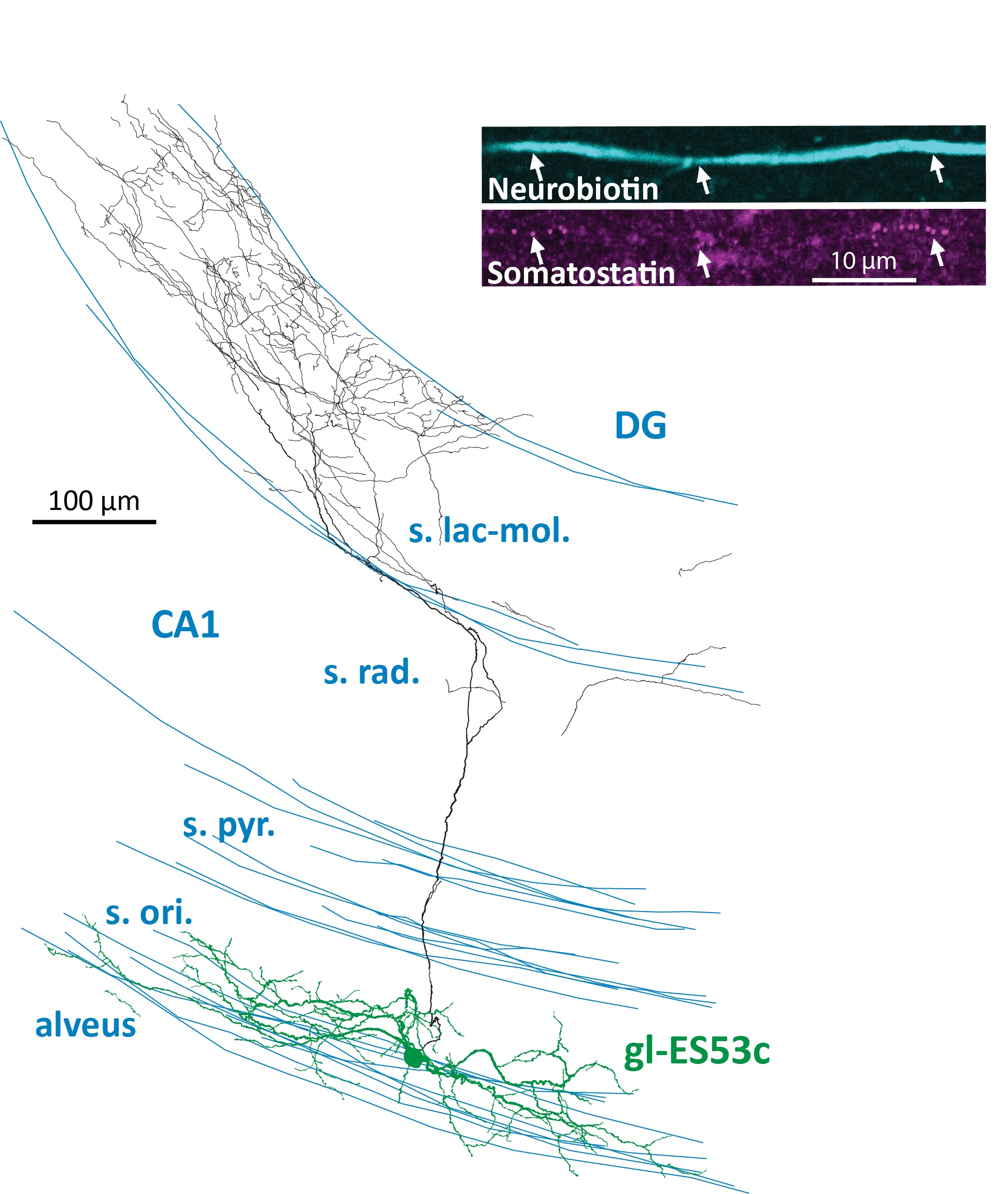
We use immunolabelling to determine the molecular expression profile of recorded neurons, as well as light and fluorescence microscopy to study the dendritc trees, axonal arborisations and projections, and synaptic connectivity. We use Neurolucida 3D reconstructions to visualize the synaptic network of distinct cell types.