The cerebral cortex endows us with the capacity to perform complex biological processes such as the subjective representation and interpretation of the world, encoding and retrieval of emotionally coloured memories, making strategic decision, understanding and empathizing with other individuals, and scientifically investigating the universe including the brain. Our scientific investigations indicate that time is the key metric to all cortical operations. Temporal demands drive selection for computational sophistication and also drive the evolution of neuronal diversity. As a result the cerebral cortex of mammals has an enormous diversity of cells operating in intricate circuits. We aim to determine how such spatio-temporal network operations in the medial prefrontal cortex and hippocampus enable complex cognitive processes including learning and decision making.
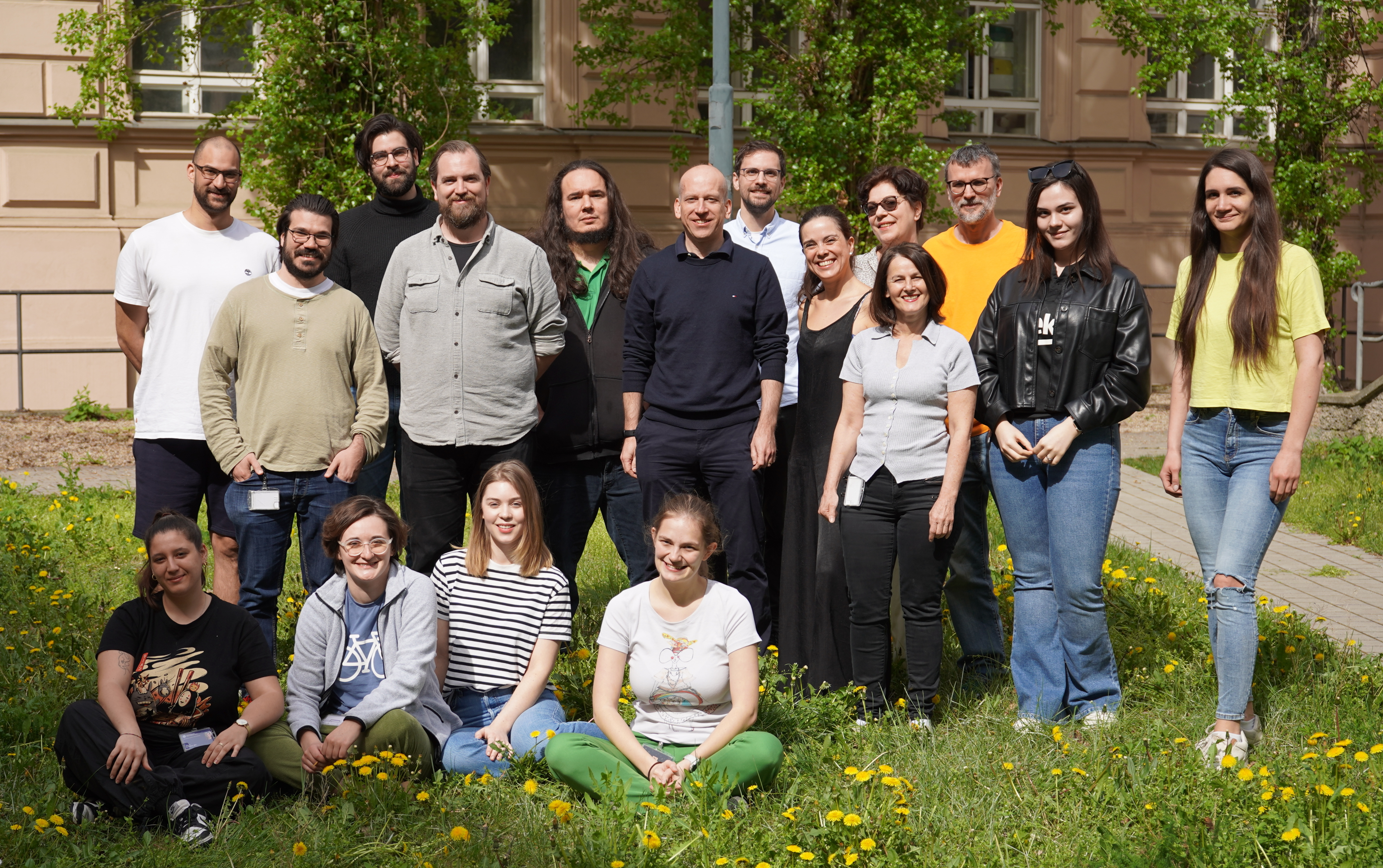
The Department of Cognitive Neurobiology was founded when the lab of Thomas Klausberger moved from the MRC Anatomical Neuropharmacology Unit at the University of Oxford to the Center of Brain Research at the Medical University of Vienna, initially with a WWTF Endowment Professorship. In 2017 Balint Lasztóczi was promoted as an Associate Professor and started a second independent research group within the department.
The research questions of both teams focus on the temporal dynamics in neuronal circuits of the prefrontal cortex and hippocampus during cognitive behavior. We use behavioural task designs probing learning, memory encoding and retrieval, decision making, cognitive flexibility, and post-decision confidence and combine that with in vivo electrophysiological recordings of single neuron activity, neuronal ensemble activity and network oscillations. Optogenetic manipulations and imunhistochemical analysis is used to probe and elucidate neuronal operations and synaptic connectivity. With these methods we aim to understand how distinct types of neuron interact in time via synaptic circuits to generate cognitive behaviour.