Klausberger Lab

In the cerebral cortex the concerted activity of neuronal ensembles enables higher cognitive functions. The hippocampus encodes spatial and episodic memory and provides this information to the prefrontal cortex to guide decisions on behavioural action. In the medial prefrontal cortex and hippocampus single neurons, the identity of which are unknown, exhibit specific firing patterns during the execution of different behaviours and simple decisions. However, the cortex contains a rich diversity of neuronal populations, which are defined by distinct connectivity, molecular expression profile and contribution to network activity. Thus, in order to discover neuronal circuits underlying learning, memory and decision making, it is critical to verify the identity of the recorded neurons or manipulate the activity of specific neuronal types.
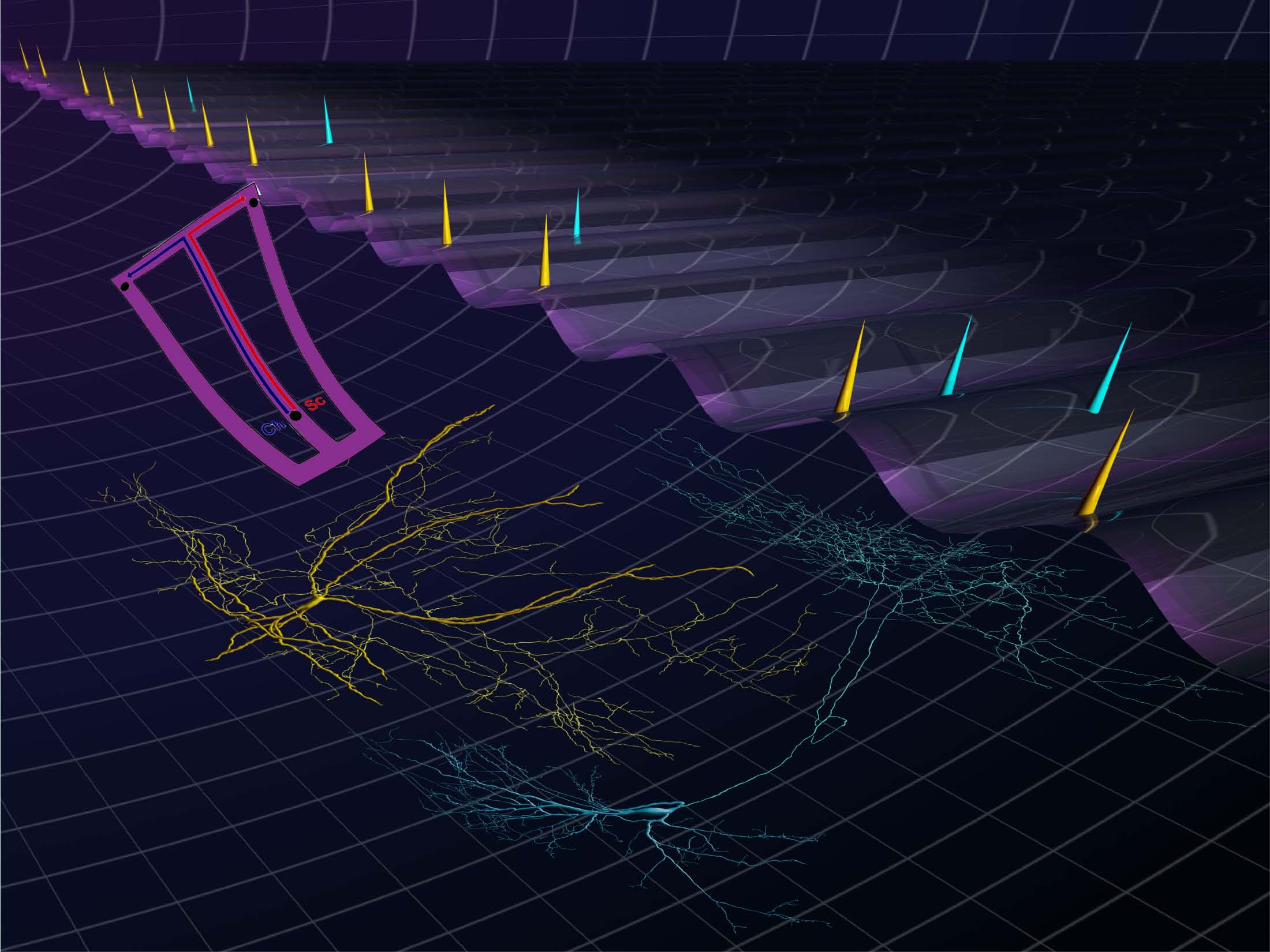
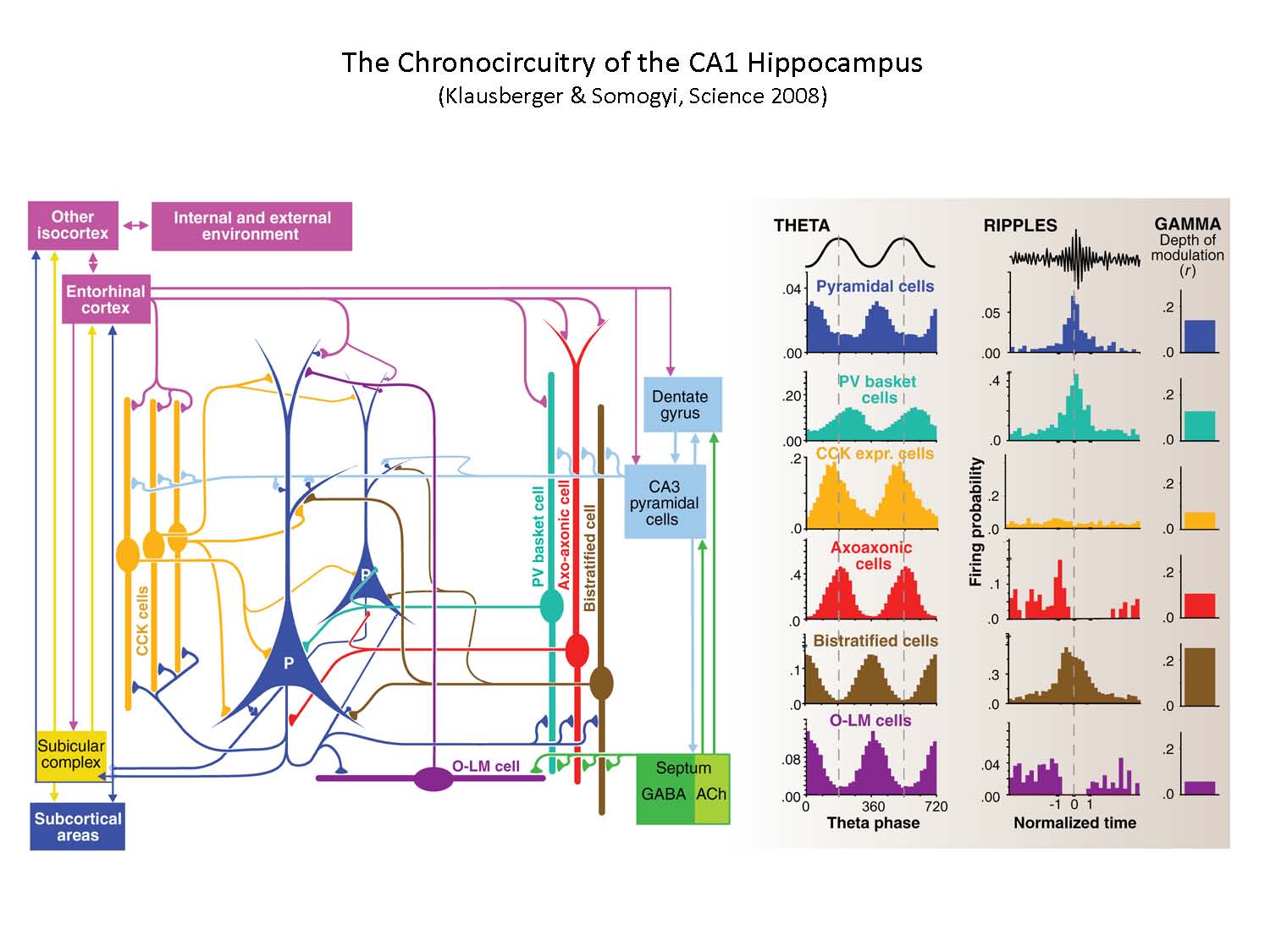
Even within a small cortical area a rich diversity of distinct neurons contributes differentially to information processing. Cortical neurons can be divided into excitatory pyramidal cells, which use glutamate as a neurotransmitter and give both local and long-range axonal projections, and inhibitory interneurons, which are GABAergic and control the activity and timing of pyramidal cells mainly through local axons. Both types of neuron can be further subdivided on the basis of their distinct axo-dendritic arborisations, subcellular post-synaptic targets, in vitro firing patterns and by their differential expression of signalling molecules.
We aim record and manipulate the activity of identified neurons and neuronal ensembles in the medial prefrontal cortex and hippocampus during different learning paradigms, memory encoding and retrieval, decision making, cognitive flexibility, value-based decision making, and metacognition. This allows us to determine how different neurons and neuronal ensembles in the hippocampus and prefrontal cortex contribute to cognition.